A worked landscape
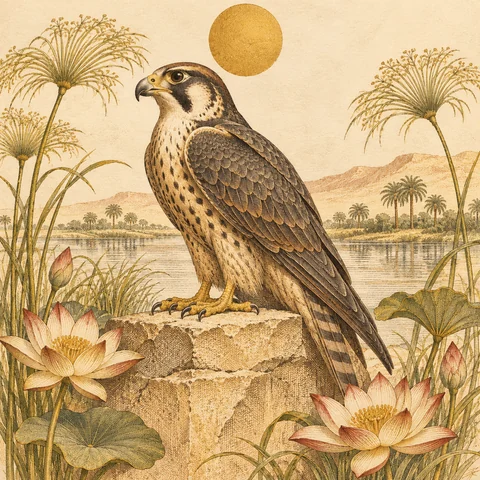
The Field of Reeds, Sekhet-Aaru, is represented through channels, fields, settlements, divine figures, and productive activity. Nebseni and Ani appear ploughing, reaping, navigating boats, and approaching powers associated with the region. The landscape is abundant, but it is not simply empty leisure. The activities that sustain life in Egypt become part of a successful existence beyond death. The chapter’s related Field of Offerings or Peace, Sekhet-Hetep, belongs to a textual and pictorial complex whose names should not be flattened into a single modern place label without attention to the selected manuscript.
Source: Egyptian Ideas of the Future Life · Chapter V, Book of the Dead 110, introduction and numbered vignette descriptions of Nebseni and Ani
Access includes ordinary pleasures
The heading to the translated spell lists aims that include entering and leaving, eating, drinking, cultivating, and sexual activity. The desired person is capable of doing things, not merely surviving as a motionless relic. The waterways provide routes, and the offerings establish a relation with divine inhabitants. In this setting the Bennu bird appears among images of renewal and provision. These details allow a richer picture than the shorthand “Egyptian paradise.” The landscape expresses what the owner hopes to possess and perform, using recognizable resources of bodily and social life.
Source: Egyptian Ideas of the Future Life · Chapter V, translated title and opening of Book of the Dead 110; Ani vignette items 1–4
A wish, not a recoverable coordinate
Budge tried to locate the prototype in a particular part of the Nile Delta, but the atlas does not adopt his speculation as an established geographical origin. A funerary map is not automatically a survey of a lost earthly region. Differences among the papyri also matter: their figures, pools, captions, and arrangements are not identical. The point of comparison is the combination of secure access and flourishing activity. This place belongs beside the Duat and the judgment scene as one part of a diverse funerary repertoire, rather than as the inevitable final room in a standardized itinerary followed by every ancient Egyptian.
Sources: Egyptian Ideas of the Future Life; Amduat papyrus inscribed for Gautsoshen, 25.3.31 · Future Life V, comparison of Nebseni, Ani, and Anhai; Met 25.3.31, different funerary program and requested freedom of movement
- Period / witness
- Selected New Kingdom papyri of Nebseni and Ani; Book of the Dead 110 has multiple versions.
- Recording context
- Book of the Dead 110 vignettes and text in funerary papyri, discussed by Budge with examples in the British Museum.
A recording location is not necessarily a story’s origin. Dates of texts, copies, and translations answer different questions.
Explore time & place →Read the sources
These references support the explanation above. Rights and edition notes are recorded individually.
Egyptian Ideas of the Future Life ↗
E. A. Wallis Budge · 1899; third edition 1908; ebook updated 2024
Edition & rights noteAmduat papyrus inscribed for Gautsoshen, 25.3.31 ↗
Department of Egyptian Art · Object ca. 1000–945 BCE; undated catalogue page
Edition & rights note