A disputed kill
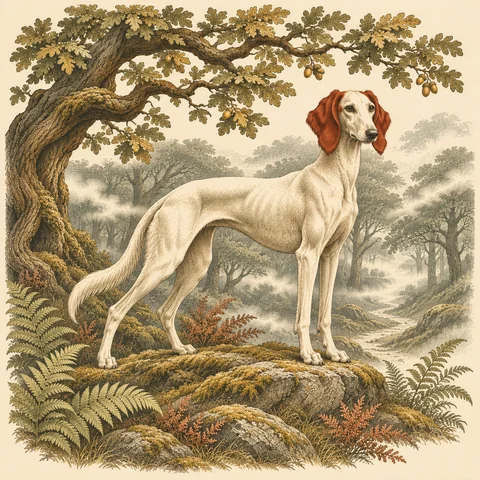
Pwyll, ruler of Dyfed, becomes separated from his companions while hunting in Glyn Cuch. He finds unfamiliar white hounds with red ears bringing down a stag. Instead of respecting their claim, he drives them away and lets his own dogs feed. Their owner arrives and identifies the act as discourtesy. He is Arawn, a king of Annwn, and Pwyll offers to repair the relationship.
Arawn proposes an unusual service. For one year each ruler will wear the other's appearance and govern his territory. Pwyll must confront Arawn's enemy Hafgan at an appointed ford. A single successful blow will decide the encounter; he must refuse any request to strike again. The agreement transforms an ordinary hunting dispute into responsibility for another ruler's people and enemies.
Source: Pwyll Prince of Dyved — Guest translation · Pwyll Prince of Dyved: opening hunt, meeting with Arawn, and agreement to exchange appearances
Winning by refusing a second blow
Pwyll enters Arawn's court and is received as its ruler. Its ordered hospitality, rich clothing, and abundant feast make Annwn a recognizable court rather than an undifferentiated realm of terror. When the appointed year ends, he faces Hafgan before the assembled nobles. His first strike is decisive. Hafgan asks him to finish the killing, but Pwyll refuses, keeping the instruction that Arawn himself had previously failed to follow.
Hafgan's followers submit, and the two territories come under Arawn's authority. Pwyll then returns to the meeting place, where the rulers recover their own appearances. His success depends on restraint after combat as much as on strength during it.
Source: Pwyll Prince of Dyved — Guest translation · Pwyll Prince of Dyved: year in Annwn, single combat at the ford, and reunion at Glyn Cuch
A better rule at home
Back in Dyfed, Pwyll hears that his subjects have enjoyed exceptionally generous and just government. He acknowledges Arawn's work and agrees to maintain its standard. The exchange therefore changes his own kingship as well as Arawn's military position. Gifts continue to pass between the friends, and Pwyll gains an association with Annwn in his title.
Guest's printed text marks omissions with asterisks around parts of the exchange episode. This account follows what that selected witness actually presents. It does not fill the gaps with details from other translations or treat the tale as a complete account of Welsh beliefs about an afterlife.
Source: Pwyll Prince of Dyved — Guest translation · Pwyll Prince of Dyved: return to Dyfed, subjects’ report, continuing friendship; asterisked breaks in Guest’s text
- Period / witness
- Medieval Welsh prose preserved in fourteenth-century manuscript collections; Guest translation 1838–1849.
- Recording context
- A named Welsh literary tale, read through Guest’s historical English translation. Medieval Christian narrative language and the translator’s omissions and vocabulary remain part of this witness; its setting does not date a first oral telling.
A recording location is not necessarily a story’s origin. Dates of texts, copies, and translations answer different questions.
Explore time & place →Read the sources
These references support the explanation above. Rights and edition notes are recorded individually.
Pwyll Prince of Dyved — Guest translation ↗
Anonymous Welsh narrative; translated by Lady Charlotte Guest (later Lady Charlotte Schreiber, 1812–1895) · Guest translation first published in the 1838–1849 Mabinogion series; historical reprint transcribed by Gutenberg; digital edition updated 4 October 2021
Edition & rights note