A precise grievance
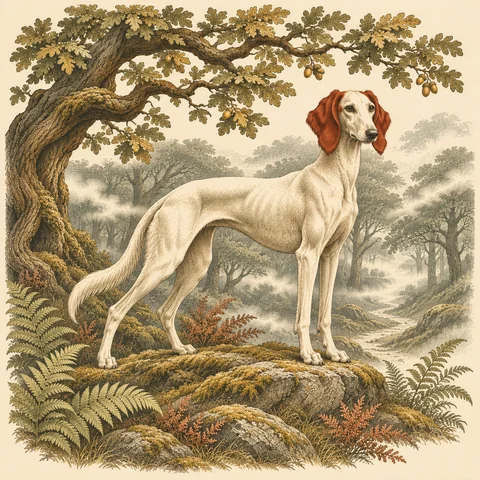
Arawn does not initially accuse Pwyll of entering forbidden supernatural territory. He identifies a specific breach of hunting courtesy: driving off the hounds that killed a stag. His refusal to greet Pwyll makes the injury socially legible before he discloses his kingship. The encounter begins with accountability for conduct, not with a simple opposition between a human hero and an inherently hostile otherworld.
Source: Pwyll Prince of Dyved — Guest translation · Pwyll Prince of Dyved: Arawn’s arrival and explanation of Pwyll’s discourtesy
Power shared through substitution
Arawn can exchange appearances with Pwyll and guide him into Annwn. Nevertheless, he needs assistance against Hafgan, whose recovery after a second blow has frustrated him. He gives clear instructions and governs Dyfed while Pwyll performs the service. His own administration wins the subjects' praise. Extraordinary power therefore coexists with particular limits, and the exchange works because each ruler undertakes a concrete responsibility for the other.
Source: Pwyll Prince of Dyved — Guest translation · Pwyll Prince of Dyved: exchanged appearances, instruction concerning Hafgan and assessment of Dyfed’s government
A relationship beyond one tale
The friends continue exchanging valuable animals and gifts. The Fourth Branch identifies Arawn as the source of Pryderi's pigs, extending an earlier alliance into the circumstances of a later disaster. This continuity does not make Arawn responsible for Gwydion's fraud. Nor does this selected material justify calling him the sole lord of every Welsh otherworld: the opening explicitly describes another king within Annwn.
Sources: Pwyll Prince of Dyved — Guest translation; Math the Son of Mathonwy — Guest translation · Pwyll: continuing gifts and Hafgan’s kingship; Math: origin of the pigs possessed by Pryderi
- Period / witness
- Medieval Welsh prose preserved in fourteenth-century manuscript collections; Guest translation 1838–1849.
- Recording context
- A named Welsh literary tale, read through Guest’s historical English translation. Medieval Christian narrative language and the translator’s omissions and vocabulary remain part of this witness; its setting does not date a first oral telling.
A recording location is not necessarily a story’s origin. Dates of texts, copies, and translations answer different questions.
Explore time & place →Read the sources
These references support the explanation above. Rights and edition notes are recorded individually.
Pwyll Prince of Dyved — Guest translation ↗
Anonymous Welsh narrative; translated by Lady Charlotte Guest (later Lady Charlotte Schreiber, 1812–1895) · Guest translation first published in the 1838–1849 Mabinogion series; historical reprint transcribed by Gutenberg; digital edition updated 4 October 2021
Edition & rights noteMath the Son of Mathonwy — Guest translation ↗
Anonymous Welsh narrative; translated by Lady Charlotte Guest (later Lady Charlotte Schreiber, 1812–1895) · Guest translation first published in the 1838–1849 Mabinogion series; historical reprint transcribed by Gutenberg; digital edition updated 4 October 2021
Edition & rights note