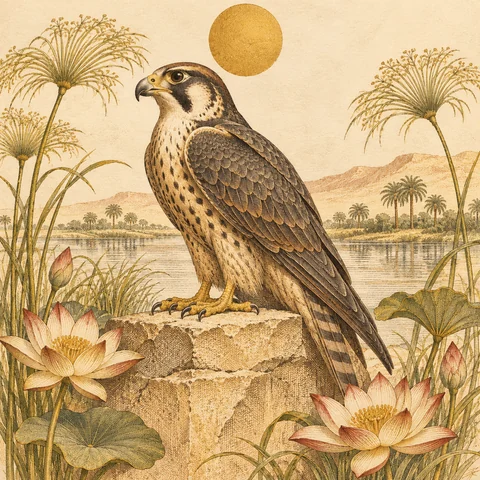
More than a symbol
Ra, also written Re, is the Egyptian sun god. In the selected creation spell, the creator speaks through the form of Khepri and describes beings emerging from his own powers. Solar names and forms need not identify isolated gods competing for one job: they can articulate different moments or aspects of divine activity. Calling Ra simply “a symbol of the sun” understates the agency attributed to him.
Source: Legends of the Gods: The Egyptian Texts, edited with Translations · Chapter I, Creation A and B
Authority with limits
The stories give Ra vulnerabilities. In the Heavenly Cow narrative he must stop the destruction he has authorized and then withdraw from direct earthly rule. In the secret-name episode, a snake fashioned by Isis defeats his ordinary knowledge until he negotiates. These are not consistent episodes in a modern biography, but distinct texts exploring what divine authority can do and where it encounters resistance.
Source: Legends of the Gods: The Egyptian Texts, edited with Translations · Chapters II and III
Following the daily world
A reader can trace Ra through creation, conflict, and healing without merging the texts into one chronology. The recurring issue is how a world continues to exist. Dawn is not merely scenery in these traditions: the successful return of light makes a cosmic claim. Our entries select a few narratives and cannot represent the many local cults, royal formulations, and funerary compositions in which Ra appears.
Source: Legends of the Gods: The Egyptian Texts, edited with Translations · Chapter I, creation embedded in the ritual against Apep; chapter II, cosmic reorganization
- Period / witness
- Attested across pharaonic Egyptian history; selected narratives survive in New Kingdom and later witnesses.
- Recording context
- Selected records include royal tombs at Thebes and Papyrus Bremner-Rhind; these are places of preservation, not a single origin for solar religion.
A recording location is not necessarily a story’s origin. Dates of texts, copies, and translations answer different questions.
Explore time & place →Read the sources
These references support the explanation above. Rights and edition notes are recorded individually.
Legends of the Gods: The Egyptian Texts, edited with Translations ↗
E. A. Wallis Budge (1857–1934) · 1912; digital edition updated 2021
Edition & rights note