Eighty years without a decision
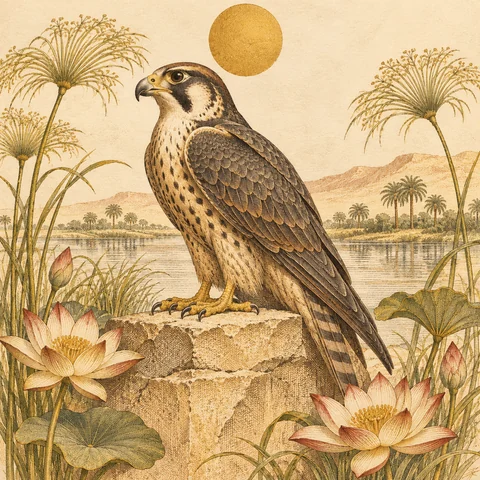
Horus claims the office of his father Osiris, but Seth refuses to surrender it. The gods argue about whether inheritance or superior force should decide the matter. Re-Harakhti favors Seth, while other divine voices support Horus. They seek the advice of Neith, who recommends awarding the office to the son while compensating Seth. Yet this judgment does not end the dispute. The tribunal’s repeated failures give the tale its unusual combination of solemn kingship and exasperating delay.
Isis intervenes through disguise and argument. She presents Seth with an invented case about a widow and a son deprived of an inheritance. Seth condemns the injustice, only to discover that his own reasoning supports Horus. The episode makes a legal principle clear by allowing an interested party to endorse it before recognizing its consequences.
Source: The Contending of Horus and Seth, Papyrus Chester Beatty I · Papyrus Chester Beatty I, recto 1–6: assembly, Neith’s letter, and Isis’s disguise
The contests become dangerous
The rivals turn into hippopotamuses for an underwater contest. Isis throws a harpoon and first catches Horus; when she later strikes Seth, his appeal to their sibling relationship persuades her to release him. Horus retaliates violently against his mother. Seth also injures Horus’s eyes, which Hathor heals with gazelle milk in this telling. This detail matters: other Egyptian eye traditions give restoration to Thoth, so a universal diagram would erase a real source distinction.
A later episode uses attempted sexual domination and a counter-deception to dispute status before the gods. The tale’s logic belongs to ancient assumptions about masculinity and power; it is not an ethical endorsement. Even a race of stone boats fails to settle things: Horus disguises a wooden boat, Seth’s real stone boat sinks, and Seth attacks again.
Sources: The Contending of Horus and Seth, Papyrus Chester Beatty I; Ancient Egyptian Amulets · Chester Beatty I, recto 8–13; Stünkel, discussion of the wedjat eye
A settlement, not a clean extermination
Correspondence with Osiris finally changes the argument. The dead ruler insists that his son has been wronged and reminds the assembly of the power of the realm to which all must eventually go. Horus receives the kingship. Seth is assigned a place with Re, associated with thunder and fear. He is contained and reassigned rather than simply erased.
The story can invite reflection on inheritance, institutions, and the difference between a valid claim and the ability to enforce it. Those are readings of this elaborate literary witness. We cannot infer from its divine courtroom an exact record of Egyptian legal procedure or a disguised report of one historical war. Its manuscript context places it among texts copied and valued by literate people in the New Kingdom.
Sources: The Contending of Horus and Seth, Papyrus Chester Beatty I; Manuscripts from Deir el-Medina · Chester Beatty I, recto 14–16; UCL manuscript list, item 1
- Period / witness
- Surviving full manuscript: Twentieth Dynasty, approximately twelfth century BCE.
- Recording context
- Papyrus Chester Beatty I belongs to a manuscript group associated with Deir el-Medina near Thebes; this is a record of circulation, not a proven birthplace of the story.
A recording location is not necessarily a story’s origin. Dates of texts, copies, and translations answer different questions.
Explore time & place →Read the sources
These references support the explanation above. Rights and edition notes are recorded individually.
The Contending of Horus and Seth, Papyrus Chester Beatty I ↗
Ancient author unknown; online page cites M. Lichtheim and W. K. Simpson · Manuscript: Twentieth Dynasty, approximately twelfth century BCE; web date not stated
Edition & rights noteManuscripts from Deir el-Medina ↗
Digital Egypt for Universities · Undated page in the Digital Egypt project
Edition & rights note