The hidden child is not safe
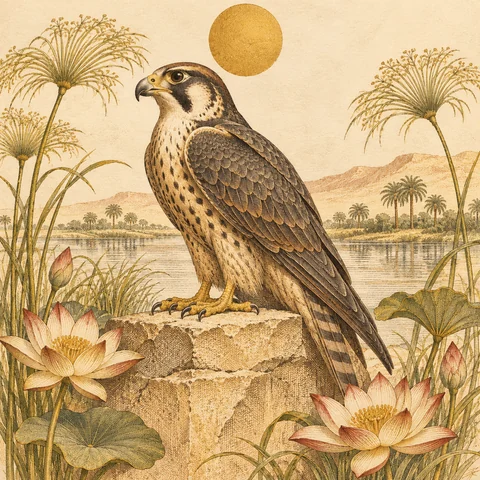
Isis has concealed Horus in the papyrus marshes to protect him from the conflict surrounding his inheritance. She leaves to obtain provisions and returns to find him motionless, with signs of poison at his mouth and body. The future defender of Osiris is now a child who cannot defend himself. Isis laments the labor of bearing and raising him and the danger that has overtaken him despite her care.
People from the marshes gather at her cries and mourn with her, but cannot revive him. A knowledgeable woman reassures Isis that the protected hiding place has not simply been breached by Seth and identifies a venomous injury. Isis examines Horus and recognizes the crisis. The text does not require us to add a scene in which Seth secretly turns into the particular animal that stung him.
Source: Legends of the Gods: The Egyptian Texts, edited with Translations · Chapter VIII, continuation beginning “I am Isis, who conceived a child,” diagnosis and lament
A private emergency becomes cosmic
Nephthys arrives weeping, and Serqet joins the appeal for divine assistance. Isis calls toward the solar boat. The sun stops moving. Thoth comes from it with effective speech and the authority to restore the child. Isis presses him to act: reassurance alone does not answer the suffering before her.
Thoth’s response is an extended sequence of protection. Horus is associated with powerful divine forms, and the statements repeatedly extend that protection to the afflicted person for whom the ritual is being performed. The poison is ordered out, life returns, and the mother can rejoice. The boat’s arrested movement makes the stakes immense. The daily continuation of the ordered world and the survival of this vulnerable body are bound together within the spell’s argument.
Source: Legends of the Gods: The Egyptian Texts, edited with Translations · Chapter VIII, arrival of Nephthys and Serqet, stopping of the boat, Thoth’s protective litany and cure
From divine recovery to a human patient
The monument’s visual program shows Horus mastering the very kinds of creatures that threaten life: he stands on crocodiles and grasps dangerous animals. The narrative explains why his image can support healing. He has passed through vulnerability, received divine aid, and emerged alive. A patient can be drawn into that same pattern through the words and object.
The stela was commissioned under Nectanebo II, more than a millennium after many New Kingdom religious manuscripts. It is one particular gathering of older traditions and current ritual practice. Nor does the story imply that Isis is powerless in general: her insistent appeal brings the helpers and stops the sun. The cure is collective. Maternal care, local sympathy, Serqet and Nephthys, Thoth’s speech, and solar authority all have parts in the outcome, which the ritual seeks to extend to another threatened life.
Sources: Magical Stela with Horus the Child, 50.85; Legends of the Gods: The Egyptian Texts, edited with Translations · Met 50.85, central relief and base inscription; Budge VIII, closing protection of Horus and the patient
- Period / witness
- Metternich Stela, reign of Nectanebo II, 360–343 BCE.
- Recording context
- Metternich Stela, Metropolitan Museum 50.85, commissioned under Nectanebo II, 360–343 BCE; found at Alexandria, probably originally from the Mnevis temple at Heliopolis.
A recording location is not necessarily a story’s origin. Dates of texts, copies, and translations answer different questions.
Explore time & place →Read the sources
These references support the explanation above. Rights and edition notes are recorded individually.
Legends of the Gods: The Egyptian Texts, edited with Translations ↗
E. A. Wallis Budge (1857–1934) · 1912; digital edition updated 2021
Edition & rights noteMagical Stela with Horus the Child, 50.85 ↗
Department of Egyptian Art · Object 360–343 BCE; undated catalogue page
Edition & rights note